

Manufacturers of variable frequency constant pressure water supply booster pump stations continue to enhance their level of intelligence through the use of IoT and AI technologies
As the core equipment of modern water supply systems, variable frequency constant pressure water supply booster pump stations, with their energy-saving, stable, and intelligent features, exhibit vast market prospects driven by the acceleration of urbanization, upgrading of industrial demands, and policy promotion. Urban renewal projects (such as the renovation of old residential areas) release greater market space, and the demand for remote operation and maintenance and predictive maintenance in commercial buildings has driven the proportion of service revenue from 12% to 28%. Plateau boosting, emergency water supply, and distributed microgrid water supply systems have become new growth points, such as the continuous growth in demand for low-pressure-tolerant and high-lift equipment in plateau areas. New urbanization drives the expansion of investment in urban water supply infrastructure. In water conservancy infrastructure projects, the demand for replacing energy-saving pumps has surged, for example, the upgrading of agricultural irrigation pump stations can increase water resource utilization by more than 20%. Variable frequency constant pressure water supply booster pump stations have achieved five core advantages of "energy saving, stability, intelligence, safety, and economy" through technological innovation, not only meeting the high requirements of modern buildings and industries for water supply quality but also aligning with energy conservation and emission reduction policies. With the deep integration of the Internet of Things and AI technology, their level of intelligence will continue to improve, becoming the mainstream direction for future upgrades of water supply systems.
1. Energy saving and consumption reduction, low operating costs
Dynamic speed regulation, energy supply on demand
Traditional pump stations regulate flow through valves, resulting in significant energy waste due to valve pressure drop. In contrast, variable frequency pump stations directly adjust flow by changing the motor speed, avoiding the phenomenon of "a strong horse pulling a light cart" and achieving energy savings of up to 20%-50%.
Case: After the renovation of a high-rise residential community, the annual electricity consumption decreased from 480,000 kWh to 320,000 kWh, saving approximately 100,000 yuan in electricity bills.
Soft start technology reduces losses
The frequency converter achieves soft start for the motor, avoiding the current surge during direct start (usually 5-7 times the rated current), extending the motor's lifespan, and reducing grid load fluctuations.
Sleep and wake-up function
During periods of low water usage, the pump station automatically enters a dormant state, maintaining only basic pressure; when water usage increases, the system quickly wakes up the water pump to avoid inefficient operation.
II. Stable pressure and high water supply quality
Constant pressure control to eliminate fluctuations
Through real-time monitoring of pipe network pressure using pressure sensors and dynamic adjustment of pump speed through frequency converters, we ensure that the pressure fluctuation range is ≤±0.01MPa, meeting the stringent requirements for water pressure stability in scenarios such as high-rise buildings and industrial precision machining.
Case: After the operating room of a certain hospital adopted a variable frequency pump station, the water pressure fluctuation was reduced from ±0.05MPa to ±0.008MPa, ensuring the normal operation of surgical equipment.
Multi-pump linkage, intelligent switching
Support parallel operation of multiple water pumps, automatically adjust the number of operating pumps according to water consumption, avoid frequent start-stop of single pump, and achieve redundancy design of "one in operation and one standby" or "two in operation and one standby" to enhance system reliability.
III. Intelligent management, convenient operation and maintenance
Remote monitoring and fault warning
Integrating Internet of Things (IoT) technology, real-time viewing of pump station operation data (such as pressure, flow, energy consumption) and receiving fault alarms (such as motor overheating, water leakage detection) through cloud platforms or mobile phone apps, enabling unattended operation and maintenance.
Case: A pump station in an industrial park predicts the lifespan of pump bearings through AI algorithms and sends maintenance reminders 30 days in advance to avoid unplanned downtime.
Data-driven optimization
Record historical water usage data, analyze peak and off-peak water usage periods, and automatically generate optimal scheduling strategies (such as pre-charging pressure and off-peak operation) to further reduce energy consumption.
Function expansion: Support for integration with smart water management platforms to achieve coordinated regional water supply scheduling.
IV. Environmental protection and safety advantages
Low-noise operation
Variable frequency speed regulation reduces mechanical vibration of water pumps, and combined with the design of soundproof enclosures, the noise level can be controlled below 55dB (compared to about 70dB for traditional pump stations), meeting the environmental protection requirements of hospitals, schools, and other places.
Water quality assurance
The fully enclosed pipeline design prevents secondary contamination, and the stainless steel water tank and pipe fittings comply with drinking water hygiene standards. It supports a regular automatic cleaning function.
safety protection
Equipped with protection functions such as overvoltage, undervoltage, overload, phase loss, and short circuit protection to prevent equipment damage; explosion-proof pump stations can be applied in hazardous scenarios such as chemical, oil, and gas industries.
V. Economic Efficiency and Applicability
The initial investment return cycle is short
Although the unit price of variable frequency pump stations is higher than that of traditional pump stations, their energy-saving effect is significant, and the cost can usually be recovered through electricity savings within 2-3 years.
Data: After the renovation of a commercial complex, the annual maintenance cost has been reduced from 80,000 yuan to 30,000 yuan, and the comprehensive investment return rate has increased by 40%.
Flexible adaptation to different scenarios
High-rise buildings: Addressing issues of excessively high water pressure in lower areas and insufficient water pressure in higher areas.
Industrial field: Provides a stable pressure source for cooling and circulating systems, cleaning equipment, etc.
Municipal water supply: Addressing pressure decay in aging pipe networks and enhancing the water usage experience for end users.
Special scenarios: pressurization in plateau areas, emergency water supply vehicles, seawater desalination for ships, etc.
Modular design, with strong scalability
Support the addition or removal of components such as water pumps and sensors as needed, to accommodate future increases in water usage or functional upgrades.
Future development trend of variable frequency constant pressure water supply booster pump station
As the core equipment of modern water supply systems, variable frequency constant pressure water supply booster pump stations will see their future development trends closely centered around intelligence, greenification, modularization, integration, and customization, in order to adapt to the changing market demands driven by accelerated urbanization, industrial upgrading, and policies.
1. Intelligentization and automation upgrade
Deep integration of IoT and AI technology: In the future, pump stations will integrate more IoT sensors to achieve real-time collection and transmission of data such as equipment status, water quality, and energy consumption. Through AI algorithm analysis, pump stations can autonomously optimize their operation strategies, such as adjusting the pump speed in advance based on water consumption forecasts, achieving more precise pressure control and energy-saving effects.
Remote monitoring and fault warning: With the help of cloud platforms and mobile applications, users can remotely monitor the operating status of pump stations, receive fault alarm information, and perform parameter adjustments and maintenance operations remotely. This will significantly reduce operation and maintenance costs and improve the reliability and response speed of the water supply system.
Predictive maintenance: Through big data analysis, pump stations can predict equipment failure risks, arrange maintenance plans in advance, avoid unplanned downtime, and extend equipment service life.
II. Continuous innovation in green energy-saving technologies
High-efficiency energy-saving motors and frequency converters: With the continuous advancement of motor and frequency converter technology, pump stations will adopt more efficient drive systems to further reduce energy consumption. For example, the combination of permanent magnet synchronous motors and intelligent frequency converters can achieve a higher energy efficiency ratio and a wider speed regulation range.
Renewable energy integration: In regions abundant in renewable energy sources such as solar and wind, pump stations will integrate photovoltaic or wind power generation systems to achieve green power supply. At the same time, through energy storage technology, pump stations can maintain stable operation during periods of unstable energy supply.
Energy recovery technology: During the drainage or pressure regulation process in pump stations, excess pressure or waste heat is converted into electrical or thermal energy through energy recovery devices, achieving energy reuse and reducing overall energy consumption.
III. Modularization and Standardization Design
Modular design: In the future, pump stations will adopt a modular design concept, standardizing and serializing components such as pumps, control cabinets, and sensors for rapid assembly and expansion. This will reduce the construction cost and cycle of pump stations, and improve the interchangeability and maintainability of equipment.
Standardized interfaces and protocols: Promote the standardization of interfaces between internal components of pump stations and external systems, adopting a unified communication protocol and data format to facilitate interconnection, interoperability, and data sharing among devices of different brands.
IV. Integration and System Solutions
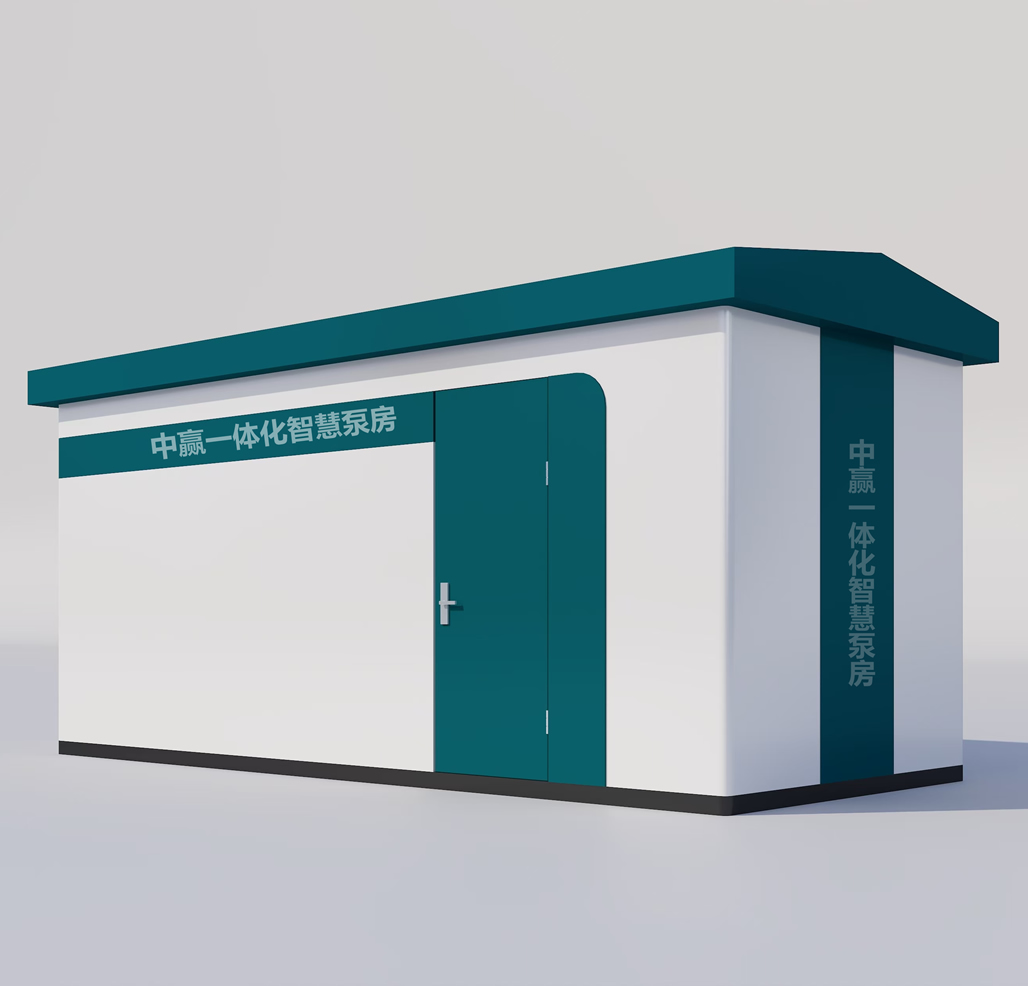
Integrated pump station: The water pump, control cabinet, pipeline, valve, etc. are integrated into a compact housing, forming an integrated pump station. This design not only saves space but also facilitates installation and maintenance, making it particularly suitable for scenarios where urban underground space is limited or where there are high requirements for environmental aesthetics.
System solution provider: In the future, pump station suppliers will no longer be limited to providing single equipment, but will transition to becoming system solution providers. By integrating upstream and downstream resources, they will offer full lifecycle services ranging from design, installation, and commissioning to operation and maintenance, meeting users' diversified and personalized needs.
V. Customization and Special Scenario Applications
Customized Solutions: Tailored to the unique demands of various application scenarios, such as high-rise buildings, industrial water usage, seawater desalination, and rural water supply, the pump station will offer bespoke solutions. For instance, in the case of high-rise buildings, the pump station must possess enhanced head capacity and steadier pressure control capabilities; whereas for rural water supply, it needs to accommodate conditions like complex water quality and inconsistent power supply.
Special Materials and Structural Design: In corrosive environments or extreme climatic conditions, pump stations will utilize corrosion-resistant materials and special structural designs to ensure long-term stable operation of the equipment. For instance, in coastal areas or chemical industrial parks, pump stations may adopt stainless steel materials and anti-corrosion coatings; in cold regions, pump stations must feature anti-freezing designs.
- Pre:Stainless steel frequency conv 2026/1/14
- Next:The advancement of smart water 2026/1/14
